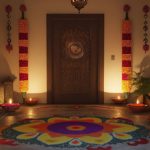


The Pooja Room is not just a place of worship but is also considered to be the spiritual center of the house. According to Vastu Shastra, any minor error in such an important zone could lead to negative energy, which would interfere with the positive energy of the entire house. Identifying and correcting Pooja Room Vastu Doshas can help restore harmony, mental peace, and spiritual well-being.
If you are building or renovating a pooja room, it may help to familiarize yourself with the basics of Vastu. Here are 14 important guidelines that will ensure your pooja room is free from Vastu defects.
1. Ideal Direction Matters
The northeast (Ishanya) direction is the most favorable for a prayer room. In case your prayer place is situated somewhere else, make sure that the idol placements are such that you pray facing either eastward or northward.
2. Avoid Bedroom Placement
It is not advisable to have a pooja room within a bedroom. However, in the event that this cannot be avoided, it is necessary that the room is separated by a curtain.
3. Correct Idol Placement
You must not place any idol directly on the floor. They should be placed using a chowki or some kind of raised platform,m and also try not to keep any idol face-to-face or back-to-back with another idol.
4. Mind the Wall Alignment
It is best not to have your pooja room next to the bathroom or toilet room, as the walls next to both these rooms will have negative vibrations due to their nature. You should ideally have wooden partitions.
5. Maintain Proper Lighting
If you keep your pooja room dim or poorly lit, it will create a feeling of negativity inside; it is ideal to keep your pooja room well-lit using bright lights or sunlight whenever possible.
6. Keep It Clutter-Free
Do not store unwanted things in your pooja room. Clutter blocks positive energy and reduces the calming effect of the space.
- Remove flowers that have dried up
- Do not keep broken idols
- Only keep essential pooja items
7. Choose the Right Colors
Colors that are light and calming, such as white, cream, or light yellow, are preferable. It is advisable not to use dark colors since they can make the area appear heavy.
8. Door Placement and Design
A pooja room door must have two shutters, and it must face either the east or north direction. It must not be creaky and noisy since it disturbs the peace of the room.
9. Avoid Direct Placement Under Staircases
It is not appropriate for a pooja room to be located under the staircase. However, in case this is unavoidable, it must be very clean and well-lit.
10. Proper Storage of Religious Books
Religious books must be stored properly, in the south or west side of the room. They must not be placed directly on the floor.
11. Use Natural Materials
The best material choices for a pooja unit are wood and marble. Try to avoid using man-made materials or metal in case they go against the concept of Vastu.
12. Ensure Good Ventilation
Fresh air is very important. A pooja room with fresh air circulation will help create an uplifting environment, particularly during prayers.
13. Position of Diyas and Incense
Diyas (oil lamps) and incense sticks should be placed in the southeast portion of the pooja room, as it signifies the element of fire.
14. Keep the Space Elevated
Pooja room elevation is very important. Make sure that the pooja room is slightly above ground level compared to the floor of your house.
Understanding the Impact of Pooja Room Vastu Doshas
If one ignores the Vastu rules and regulations, the pooja room will not fulfill its intended purpose because problems such as wrong direction, clutter, and incorrect idol positioning can create restlessness and make it difficult to concentrate while praying.
The problem of Vastu doshas can be corrected through little effort by making some small corrections, such as repositioning the idol, lighting the place better, and avoiding clutter.
Small Changes That Make a Big Difference
There are certain things that people often overlook when building a pooja room. These include things that ensure that the pooja room remains balanced all the time, and they are as follows:
- Clean the room and purify it regularly
- Avoid placing gadgets close to the place
- Do not use artificial flowers in the pooja room
- Keep the pooja room free from noise and disturbance
All these small measures, along with Vastu considerations, assist in creating a positive spiritual atmosphere.
Creating a Space That Feels Right
The first impression that one gets while entering the pooja room should be soothing. While adhering to Vastu principles is important, at the same time, one needs to create a space where one can unwind and get in touch with one’s inner self.
In case all these Vastu considerations cannot be fulfilled owing to some architectural restrictions, then it is important to keep the pooja room clean and properly lit.
Designing Harmony into Your Home
Pooja Room Vastu Doshas should never be a mere matter of rules; on the contrary, it is all about bringing your house into harmony with the forces of nature. By taking care of this aspect, you will be able to achieve both spiritual and psychological benefits for your home.
If you are interested in designing an interior layout for your house based on Vastu, consulting experts in this field is an effective way to accomplish your goal. Professional guidance will allow you to create beautiful and harmonious interiors that provide comfort, tranquility, and inspiration.
In modern times, homeowners are looking to make changes and renovations; they need to take into consideration various things. These include home renovation services, interior design concepts, Vastu-friendly interiors, modular pooja units, and space optimization. For those seeking expert guidance, Rennovate offers a balanced approach to designing spaces that align aesthetics with Vastu principles while maintaining practicality.