
The commercial design realm is transforming more speedily than it ever has before due to new technologies, workforce preferences, and the demand for spaces that are super-efficient. Enterprises looking for a commercial interior designer near me in 2026 will find that the emphasis has moved considerably towards adaptable floor plans, health-focused ideas, and smart substances that not only boost productivity but also strengthen brand recognition. Trends of the current year revolve more around people, and hence, businesses can combine the visual appeal with the practical use to provide valuable experiences to their employees, clients, and visitors.
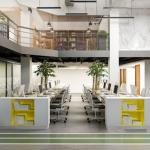
1. Human-Centric Spatial Planning
As companies rethink how people use shared spaces, the commercial interiors are less focused on the rigid plans and more on the human needs.
Instead of traditional cubicles or overly open layouts, designers are integrating:
- • Hybrid zones for in-person and virtual collaboration
- • Personal focus areas with ergonomic setups
- • Lounge-inspired spaces that encourage relaxed teamwork
- • Micro-environments tailored to specific work styles
Such an approach eliminates unnecessary movement, facilitates the workflow, and enables the teams to stay connected, which is a great plus of comfort; besides, they do not compromise one another.
2. Tech-Integrated Interiors
Technology is increasingly becoming part of the design itself rather than a separate entity. In 2026, the commercial spaces are getting equipped with:
- • Smart lighting that adjusts automatically to daylight levels
- • Touchless systems for hygiene-friendly environments
- • Occupancy sensors for optimizing room usage
- • Acoustic tech panels that balance sound in open offices
- • Digital walls for presentations, data displays, and branding
These unions show a farsighted attitude toward the future, thus providing a stable environment for the business that is flexible and reliable.
3. The Rise of Sustainable and Recycled Materials
Sustainability is no longer a matter of temporary vogue but rather a fundamental design philosophy. The materials that are used now are environmentally friendly, reliable, and have a nice look.
Some of the most prominent material trends include:
- • Recycled aluminum, glass, and timber
- • Low-VOC paints and adhesives
- • Biodegradable composites
- • Eco-friendly flooring alternatives like cork and bamboo
Besides that, designers are paying attention to energy-efficient lighting layouts as well as natural ventilation strategies, thus giving the businesses an opportunity to lessen their environmental impact and operational costs.
4. Biophilic Elements That Go Beyond Décor
Introducing nature into the indoors is not a novelty; however, 2026 adopts biophilia on an architectural level rather than merely decorative.
Commercial spaces are incorporating:
- • Large indoor green walls for air purification
- • Skylights and expanded window systems
- • Natural textures such as stone, wood, and clay
- • Indoor planters integrated into furniture
- • Water-inspired design accents
The additions mentioned above promote calmness, lower stress, and increase employee well-being; thus, they become indispensable in today’s offices.
5. Soft Luxury: A New Aesthetic Identity
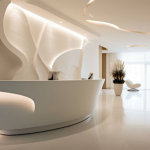
The new commercial aesthetic is a combination of minimalism and luxury. This trend, called “soft luxury,” employs refined yet simple components that bring the space to the next level without being showy.
Expect to see:
- • Curved furniture forms
- • Tactile fabrics like boucle, suede, and linen blends
- • Soft ambient lighting
- • Muted palettes with warm neutrals
- • High-quality finishes with understated elegance
Soft luxury is especially effective in such environments as clinics, retail stores, reception areas, and boutique offices, where the ambiance has great influence on the visitor’s perception.
6. Multi-Functional Spaces for Dynamic Teams
As the teams become more dynamic, the commercial interiors have to be capable of supporting numerous tasks even within a limited area of floor space. This has led to the emergence of multi-functional designs that maximize the utility.
Designers now use:
- • Modular furniture that reconfigures easily
- • Movable partitions for quick layout changes
- • Foldable or concealed workstations
- • Dual-purpose walls that act as both dividers and storage
- • Expandable meeting pods
This design orientation is a great source of advantages for the start-ups, co-working spaces, and offices with a hybrid work schedule, in particular.
7. Using Data to Inform Design Decisions
Business interior design has evolved to be more analytical. Brands are now requiring spaces that not only allow for the efficient performance of the employees but also ease the customers’ experience and, consequently, prevent employee burnout. Hence, data-driven design is becoming more and more popular.
This method uses:
- • Heatmaps to understand space usage
- • Productivity analytics for layout planning
- • Satisfaction surveys from employees
- • Footfall metrics for commercial showrooms
- • Real-time occupancy data
This ensures every part of the design delivers measurable results, not just visual appeal.
8. The Comfort-Driven Workplace
Comfort is at the core of the most recent design concepts, with the interiors taking inspiration from the hospitality and residential sectors.
Comfort-focused features include:
- •Lounge seating
- • Plush textiles
- • Ambient lighting layers
- • Calm, neutral color schemes
- • Relaxed collaboration corners
The trend is very advantageous for dental clinics, healthcare businesses, and wellness environments where the establishment of trust and calmness is an absolute must.
9. Mid-Blog Insight: Why Design Personalization Matters
When companies search for “commercial interior designers near me,” they usually realize that the templates and standard layouts are not able to fulfill the needs of the modern world anymore. The businesses of today choose to have concepts that are not only personalized but are also in line with their brand story, workflow, and customer expectations. Customization goes a long way in enhancing user experience as well as in ensuring that the space remains relevant for years to come. A lot of designers, like Rennovate, are placing most of their emphasis on tailor-made solutions that not only serve the function but also include the technology and the aesthetics.
10. Expert Touches Inspired by Real Design Practice
Experienced design teams such as the ones at Rennovate offer a wealth of insights that highlight numerous strategies that are rapidly gaining ground in 2026:
Practical tips from industry practice:
- • Always prioritize space planning before selecting materials.
- • Choose lighting based on the type of activity performed in each zone.
- • Invest in durable finishes to reduce maintenance costs.
- • Balance open areas with enough private spaces to maintain productivity.
- • Use color psychology to enhance mood and brand presence.
These principles help businesses build interiors that are both beautiful and high-performing.
A Purposeful Direction for Future-Focused Businesses
As we move into the year 2026, commercial design is focusing more on creating meaningful and responsive environments that are a reflection of the ways in which people work, collaborate, and experience space. Businesses that are in search of “commercial interior designers near me” will discover that the design concept has become more thoughtful, and it now seamlessly integrates aesthetics, technology, sustainability, and wellness into one harmonious approach. The path leading to the creation of impactful workspaces is less arduous when it is guided by experts who have a deep understanding of the needs of modern design.
If you want to construct a commercial space that is ready for the future, our services are the ones that you should turn to for help with intelligent planning, indicative choices of material, and concepts that put users first and thus have the effect of elevating your business environment.
Besides the placements of the primary keywords, here are several other secondary, high-volume terms that have been naturally incorporated: office interior design trends, modern commercial interiors, and workspace design ideas. Such insights, coupled with the expert guidance, can be instrumental in shaping a commercial interior that will be a constant source of support for you in achieving your goals for years to come.