
Mumbai’s work culture is changing rapidly with the time. As the hybrid teams, wellness-focused workspaces, and technology-led operations are becoming the standard, office interiors are no longer just about the looks; they are directly affecting productivity, creativity, and employee satisfaction.
Businesses that are designing their next workspace need to know the trends that are coming. Office interiors in 2026 will be the reflection of characteristics like flexibility, sustainability, and smart space planning. While office interior designers in Mumbai are still coming up with new ideas for the modern workspaces, these are the ten most impactful trends that are shaping productive office environments throughout the city.
1. Flexible Layouts That Adapt to Changing Teams
Fixed seating plans are giving way to modular designs. The offices have to be the ones which provide for the changing team sizes, project-based seating, and hybrid collaboration. Movable partitions, modular desks, and reconfigurable meeting pods make it possible for spaces to change without the time for renovation. This flexibility both delays the renovation costs and keeps the teams agile and comfortable.
2. Wellness-Driven Design Takes Center Stage
The well-being of employees has become the main concern of the design. The office interiors of Mumbai in 2026 will be placing increased emphasis on the physical and mental health of the employees. All offices are expected to be equipped with ergonomic furniture, optimal lighting, indoor air quality, and acoustic comfort, which were previously considered luxury additions. Also, quiet rooms, relaxation zones, and meditation corners are increasingly making their way into the progressive workspaces.
3. Smart Offices Powered by Technology
Technology is gradually becoming one with interior design. For example, smart lighting systems adapt according to the amount of daylight, the temperature in the room is controlled by a device that detects the presence of people, and an access card is used for opening the door. All these measures contribute to the comfort of the users and at the same time help to save energy. Companies are now equipping their conference rooms with advanced video collaboration tools that facilitate remote and in-person teams equally, thus making productivity overall stronger.
4. Biophilic Elements for a Natural Work Experience
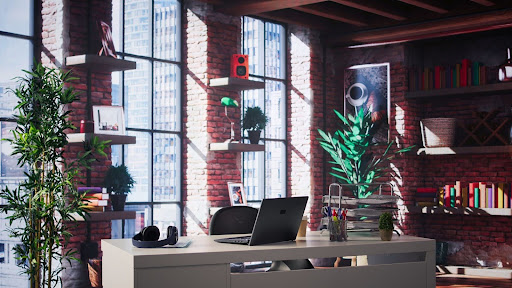
Mumbai has a very compact urban environment that makes nature-based interiors even more necessary. Design strategies that look inward to nature include using plants in the office, green walls that are covered with live plants, materials that are eco-friendly, and views to the outdoors to make workspaces that are serene. Such opportunities help reduce tension, increase focus, and even increase employees’ well-being. Even small-sized offices can find a way to bring the greenery through the vertical gardens and planter-integrated furniture.
5. Collaboration Zones That Spark Innovation
Focusing on solving problems in silence is the hallmark of the traditional office, but in contrast to that, modern offices are providing both these conditions: quiet areas as well as collaborative spaces. The open discussion area, relaxed seating, café-style corners, and project hubs have been used extensively in 2026, and their popularity remains unabated. These places finance the output of work through the free exchange of ideas and interaction between different teams without interrupting the concentration in the quiet zones.
6. Sustainable Materials and Responsible Design
The use of materials and design that helps in sustaining the environment is not a passing fashion; rather, it is a fundamental requirement now. Offices are turning to the use of eco-friendly materials such as recycled wood, paint with low VOC, LED lighting, and even stone and glass when they are sourced in a sustainable way. In addition to the benefits to the environment, sustainable interiors make a company attractive as an employer that is socially responsible, and this is very important to the new generation workforce.
7. Brand Identity Woven into Interior Spaces
The office space in Mumbai is gradually turning into a powerful branding tool for the company. Interior decor now serves as a mirror to the corporation’s culture, values, and market position. Elements like colors, wall graphics, textures, and even the furniture style are chosen to be consistent in all the areas that the brand is making use of, thus reinforcing the brand identity. Not only does this enhance the visual aspects of the workspaces, but it also consolidates the company culture and makes the employees feel a greater bond with their organization.
8. Acoustic Zoning for Noise Control
As open plans are getting more popular, noise control is turning out to be a very important factor for work efficiency. Some of the means to achieve a good balance between collaborative work and solo work are the use of acoustic panels, sound-absorbing ceilings, attractive and comfortable furniture, and well-planned zoning. In order to provide a place for conversations, which can also be of a confidential nature, without causing a disturbance, there are phone booths and private pods as a new addition.
9. Personalized Workstations and Hybrid Comfort
The concept of “one-size-fits-all” workstations is disappearing. Now it is very typical to see adjustable desks, sit-stand choices, individually personalized storage, and task-specific seating. The hybrid work model has also changed the face of the design, and as a result, hot-desking systems, locker zones, and shared workstations are no longer seen as a temporary solution but as a permanent feature.
10. Efficient Space Planning for Maximum Output
Mumbai is a metropolitan city where space is the most valuable thing, and thus efficient planning is one of the main things that directly affect productivity. One can find here smart circulation areas, dual-use spaces, small meeting rooms, and well-thought-out storage that not only allow the maximum utilization of the space but also prevent the area from getting congested. Office interior designers in Mumbai are nowadays heavily focused on the efficiency of the layout; that is the main thing that is leaving room for both the flow of work and the comfort of the people using the space in every square foot.
How These Trends Shape Real Office Projects in Mumbai
Design trends have only their existence to be meaningful if they are converted into functional workspaces. Mumbai has different diverse environments for work. Among these are corporate headquarters, co-working spaces, boutique studios, and startup offices. So, each of these places will require a different combination of privacy, collaboration, flexibility, and brand expression. Office interiors in the year 2026 are the outcome of the joint work of various teams. Among them are architects, interior planners, and operational teams who collaborate to ensure that aesthetics, employee needs, and business goals are in perfect harmony.
Material and furniture choices, along with space planning, lighting, and branding, are just some of the aspects of the modern office that are deeply research-driven to meet the challenge of creating productive and healthy environments. The space itself becomes a tool of productivity, an energy source that is able to recharge the employees, and also a support for work patterns that are in constant evolution.
Materials, Colors, and Finishes Defining 2026 Offices
The interior of the office will be finished with more refined and calmer decor. Neutral palettes combined with earthy textures are the leading design trends of Mumbai offices in 2026. Thus, soft greys, warm beiges, muted greens, and natural wood tones are the colors that create both comfortable and professional environments. The application of glass is being extended in a variety of ways, not only for transparency but also for the enabling of natural light. Many offices are choosing matte finishes, textured laminates, and durable modular flooring for both their aesthetics and maintenance efficiency.
The Shift Toward Employee-Centric Office Design
Probably the biggest shift is a philosophical one rather than a noticeable change in the visual aspect. Workspaces are no longer framed for management efficiency alone; they are getting designed as employee-centric ones. Comfort, movement, accessibility, and mental wellness are the new parameters that direct the architects’ and designers’ choices. Offices are made in such a way as to be able to provide working, collaborating, relaxing, and learning environments inside the same space. Thus, the overall interiors strategy is what really makes the long-term productivity sustainable.
Designing Tomorrow’s Workspaces with Proven Expertise
As these changes in work styles and preferences continue to take place, the need for and importance of professional design teams become more evident. Rennovate is blending the traditional with the modern through its data-driven space planning, functional zoning, and user-focused design methods, thereby turning these trends into tangible, real-world scenarios. Their methodology bridges the gap between global design philosophies and local office requirements of Mumbai.
In the coming years, enterprises willing to provide long-lasting, flexible, and performance-enhanced working environments will put their trust in thorough planning over mere visual charm. Partnering with seasoned office interior designers in Mumbai not only facilitates the seamless integration of sophisticated solutions like corporate office interior design, commercial interior contractors, modular office furniture solutions, workspace planning services, and turnkey interior projects but also helps in coordination. Rennovate, thus, appears as a reliable companion in delivering offices that invite productivity, growth, and employee well-being as Mumbai embraces 2026 with new workplace expectations.